7 Tips for Choosing the Right Railway or Subway Station Door

Time:2026-09-21 Author:Sienna
0%

Choosing a station door is not a simple matter of selecting steel, glass, or an attractive finish. The decision affects passenger safety, accessibility, ventilation, security, maintenance, and daily operating costs. Every station has different conditions. A busy underground platform needs different protection from a quiet regional stop.

So, how should planners answer the question, “How to choose the right door for a railway or subway station?” The answer begins with real site conditions. Measure passenger flow during peak hours. Observe luggage movement, wheelchair access, emergency routes, and the pressure created by trains entering the platform. Small details matter. A narrow opening can slow evacuation. A weak seal can allow dust, smoke, or tunnel noise into public areas.

Dr. Peter Wood, a railway safety and passenger-flow consultant, explains, “A station door is part of the safety system, not merely an entrance.” This principle supports a practical comparison of door materials, opening systems, safety sensors, fire performance, acoustic control, and maintenance access. Reliable doors should respond quickly, resist repeated impact, and remain understandable to passengers under stress.

However, no checklist is flawless. Local climate, vandalism risks, cleaning routines, and future passenger growth may change the best choice. A door that performs well in a dry station may struggle in a humid tunnel. These seven tips provide a clear starting point. They also encourage designers to question assumptions before installation.
7 Tips for Choosing the Right Railway or Subway Station Door

Map Station Needs: Separate Platform, Concourse, Emergency, and Service Doors

Choosing the right railway or subway station door starts with mapping station needs. A platform screen door is not a concourse door. An emergency exit is not a service entrance. Each location has different passenger flows, pressure loads, fire conditions, and maintenance risks.

UITP’s 2023 Global Metro Figures report records more than 20,000 metro stations worldwide. That scale makes standardization useful, but uniform doors can create local problems. Platform doors need accurate train alignment, impact resistance, and clear sightlines. Concourse doors should manage crowds without narrowing accessible routes. Emergency doors must open quickly, remain visible, and support evacuation planning under NFPA 130 guidance. Service doors need controlled access, durable hardware, and enough clearance for equipment.

During a station review, draw passenger, staff, and emergency paths separately. Mark peak-hour queues, platform edges, lifts, stairs, and delivery routes. The U.S. Federal Transit Administration’s National Transit Database shows that rail systems handle billions of passenger trips annually, so small circulation mistakes can repeat constantly. A neat door schedule can still be wrong. Recheck it against real crowd behavior, not only drawings. Also inspect wet floors, winter clothing, luggage, and delayed trains. These details often change the best door width, swing direction, and opening speed.

Set Compliance Targets: NFPA 130, EN 1634-1, and ADA’s 32-Inch Width

Choosing a railway or subway station door starts with measurable compliance targets, not appearance. NFPA 130 addresses fire protection and life safety in fixed guideway transit systems. It can influence door location, separation, egress, and emergency operation. The exact edition and adopted local requirements matter. Check them with the authority having jurisdiction before approving drawings. One detail is often missed. A door may carry a fire rating, yet its frame, hardware, glazing, and installation can weaken the tested assembly. Require complete evidence, not a label alone.

EN 1634-1 evaluates fire-resistance performance through standardized testing, commonly for doorsets and shutters. It does not automatically prove suitability for every station, smoke condition, or national code. Ask for the tested configuration and classification. Review leaf thickness, vision panels, seals, closer force, and wall construction. Small changes can invalidate assumptions. They often do.

For accessible routes in the United States, ADA requirements generally call for at least a 32-inch clear opening for a single door. Measure usable clear width with the door open, not the frame size. Crowded platforms create another practical test: can a wheelchair pass without striking equipment or nearby passengers? Include thresholds, maneuvering space, opening force, and emergency release details. I would set a wider project target when space allows. It costs more upfront, but a narrow minimum can become an everyday problem. Recheck field conditions after installation; drawings are not always reality.

Compare Door Types by Location: Sliding, Swing, and Platform Screen Systems

7 Tips for Choosing the Right Railway or Subway Station Door

Choosing a railway or subway station door starts with its location, not its appearance. Map passenger flow before selecting a system. Sliding doors suit narrow concourses because they need no swing clearance. Measure the wall pocket carefully. A few lost centimeters can disrupt equipment access. Swing doors work well in staff areas, service rooms, and quieter entrances. They offer simple operation, but busy corridors may create collision risks. Keep the opening clear.

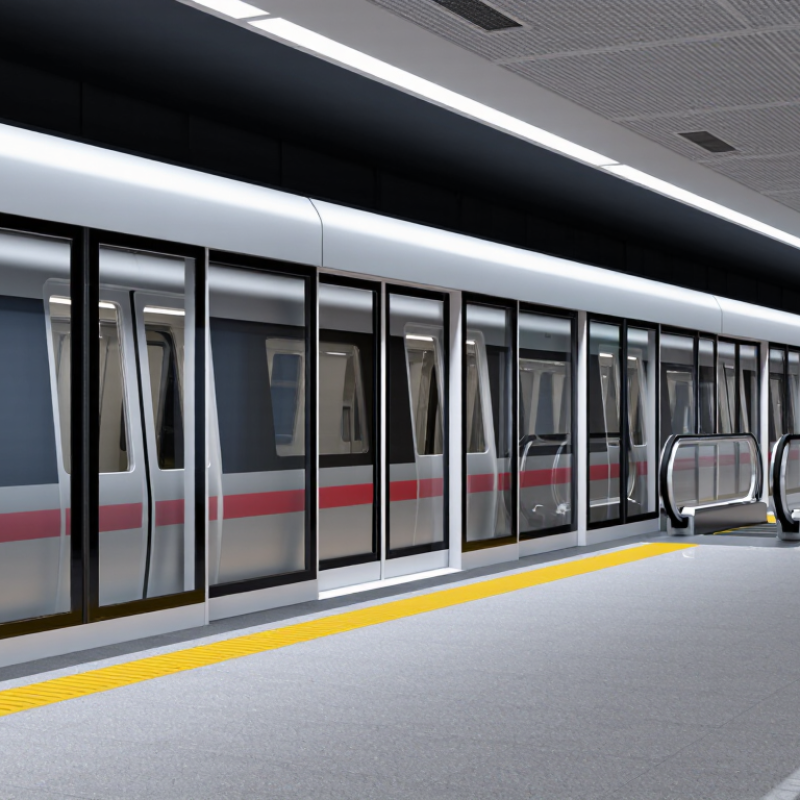
At the platform edge, platform screen systems provide a stronger separation between passengers and the track zone. They can improve crowd control, reduce drafts, and support climate management. Their alignment must match train stopping positions. Even a small positioning error matters. Check platform width, sightlines, evacuation routes, and accessibility requirements with qualified engineers. Local railway codes and fire rules must guide the final design.

Consider noise, dust, weather, cleaning, and emergency release points. Sliding mechanisms need protected tracks and planned inspections. Swing doors require durable hinges and enough room for safe movement. Platform systems demand reliable controls, sensors, and backup procedures. Do not judge maintenance from a showroom demonstration. Ask how technicians reach worn rollers, seals, and control panels. I have seen layouts that looked efficient but became awkward during peak boarding. That mistake is easy to repeat. Recheck passenger behavior, not only drawings. A practical choice balances movement, safety, service access, and long-term operating conditions.

Choosing the Right Railway or Subway Station Door

The chart compares the practical suitability of sliding, swing, and platform screen door systems across common railway and subway locations. The 1–5 index reflects typical operational requirements: passenger flow, space efficiency, access control, safety separation, and compatibility with the station environment.

Specify Performance: EN 16005 Safety, Cycle Speed, Sensors, and 24/7 Duty

Choosing a railway or subway station door starts with performance, not appearance. UITP’s Metro Figures 2021 recorded more than 60 billion annual metro passenger journeys before the pandemic. That volume creates severe pressure on entrances, platforms, and evacuation routes.

EN 16005 should guide the safety specification for powered pedestrian doors. It addresses risk reduction, protective devices, force limits, and safe movement. However, it does not prescribe one universal opening speed. A fast door can improve passenger flow, but excessive speed may increase impact risks. Specify the complete cycle instead: opening time, hold-open time, closing time, and recovery after obstruction.

Sensor selection needs equal attention. Combine presence detection with monitored safety edges where the risk assessment requires them. Sensors should detect children, luggage, wheelchairs, and passengers stopping near the threshold. Test them during rain, dust, glare, and crowded periods. Laboratory results can look perfect. Stations are less forgiving.

For 24/7 duty, request verified cycle data, not vague “heavy-duty” language. Require endurance testing, component replacement intervals, fault logging, and manual release access. The U.S. Federal Transit Administration’s National Transit Database shows rail systems operate across millions of vehicle and facility service hours each year, highlighting the cost of weak maintenance planning. Specify a realistic cycle rate based on peak passenger counts. A door that opens quickly but overheats after repeated use is not a high-performance door. That is an easy mistake.

Plan Ownership: IEC 60529 IP Ratings, Corrosion Control, Spares, and Maintenance

7 Tips for Choosing the Right Railway or Subway Station Door

Plan Ownership: IEC 60529 IP Ratings, Corrosion Control, Spares, and Maintenance

A station door should be judged across its ownership period, not just during installation. In depot inspections, I look for dust packed into tracks, standing water near thresholds, and fasteners showing orange corrosion. IEC 60529 separates protection levels clearly: IP6X means dust-tight, while IPX5 protects against water jets. These ratings are not interchangeable. A high IP rating also does not guarantee corrosion resistance.

Specify the environment before selecting materials. ISO 12944 classifies atmospheric corrosion from low C1 exposure to very high C5 conditions. Coastal platforms, underground wash-down areas, and winter-salt zones may require different coatings, drainage, and stainless-steel grades. The European Environment Agency has repeatedly identified road salt and moisture as major contributors to infrastructure corrosion. Small details matter. Sloped sills can prevent trapped water. Protected hinges can reduce cleaning-related damage.

Ownership planning should include replaceable seals, accessible rollers, standard fasteners, and a documented spare-parts list. The United Nations Environment Programme’s 2024 Global Resources Outlook reports that global material extraction has more than tripled since 1970, strengthening the case for repairable designs. Maintenance intervals should reflect passenger volume, cycles, cleaning chemicals, and climate data. A six-month inspection may be excessive in one station and inadequate in another. That assumption deserves review. Record failures, not only completed inspections, and revise the maintenance plan when field evidence disagrees with the original specification.

7 Tips for Choosing the Right Railway or Subway Station Door - Plan Ownership: IEC 60529 IP Ratings, Corrosion Control, Spares, and Maintenance
Tip Decision Area Relevant Data or Standard Recommended Selection Approach Verification During Procurement Ownership and Maintenance Effect
1 Match the door to the exposure zone Station doors may be located in dry concourses, semi-exposed platforms, wash-down areas, plant rooms, tunnels, or external entrances. Water, dust, cleaning chemicals, salt, vibration, and passenger traffic can differ significantly by location. Define the installation environment before selecting materials or seals. Treat an external platform entrance and a conditioned internal concourse as separate duty categories rather than using one standard door specification. Record temperature range, humidity, rainfall or wash-down exposure, dust level, drainage conditions, cleaning method, wind exposure, and expected daily operating cycles in the technical schedule. A clearly defined environment reduces premature seal, finish, sensor, and hardware replacement. It also prevents over-specifying every door when only selected locations require enhanced protection.
2 Specify the correct IEC 60529 IP rating IP54 Limited dust ingress protection and protection against water splashes.
IP65 Dust-tight and protected against water jets.
IP66 Dust-tight and protected against powerful water jets.
IP67 Dust-tight and protected against temporary immersion in water up to 1 m for up to 30 minutes under test conditions.
Select the rating for the complete protected assembly or enclosure, not only for the door leaf. Use IP65 or IP66 where regular wash-down or strong water jets are expected. Do not assume IP67 automatically provides the same protection against water jets as IP65 or IP66. Request an independent or documented test report for the specified configuration, including frame, gaskets, thresholds, access panels, cable entries, locks, and drainage details. Confirm whether the rating applies when the door is closed and correctly installed. Higher protection can increase seal complexity and inspection requirements. Gaskets, cable glands, drainage paths, and compression points should be included in preventive maintenance routines.
3 Control corrosion by environment and material Corrosion risk is affected by moisture, chlorides, pollutants, condensation, dissimilar metals, trapped water, and cleaning chemicals. ISO 12944 uses atmospheric corrosivity categories from low indoor exposure through high and very high industrial or marine exposure. Use corrosion-resistant finishes and closed, drainable profiles. Stainless steel commonly used for demanding applications includes 304 for many general indoor conditions and 316 or equivalent corrosion-resistant grades where chlorides, coastal air, de-icing salts, or aggressive cleaning agents are present. Confirm suitability for the actual environment. Require material certificates, coating system details, surface preparation requirements, fastener compatibility, galvanic-isolation provisions, and evidence of relevant corrosion testing. Check that cut edges, welds, corners, and concealed cavities receive appropriate protection. Corrosion control lowers the likelihood of seized hinges, weakened fixings, damaged thresholds, staining, and increased operating force. Cleaning and touch-up procedures must be compatible with the selected finish.
4 Size the door for traffic, safety, and duty cycles Railway and subway doors may experience repeated opening, closing, impact, vibration, pressure differences, and peak passenger flows. The required performance depends on door type, clear opening, mass, speed, escape function, and operating frequency. Define clear opening dimensions, accessibility needs, opening and closing speed, hold-open requirements, emergency release, anti-entrapment protection, wind or pressure loads, and expected daily cycles. Select hardware and operators for the calculated duty rather than only the door weight. Request cycle-test results, safety-function test procedures, emergency operation data, maximum permissible operating force, noise limits where relevant, and compatibility information for access control and fire or life-safety systems. Correct duty classification reduces motor, gearbox, hinge, closer, and latch failures. Cycle counters and event logs can help maintenance teams replace wear parts before service disruption occurs.
5 Plan critical spares from risk and lead time Spare requirements depend on failure consequence, installed population, commonality of parts, supplier lead time, storage conditions, and whether a component is safety-critical or proprietary. Classify parts as safety-critical, operationally critical, or routine consumables. Typical items to evaluate include gaskets, rollers, hinges, locks, closers, sensors, actuators, control modules, fasteners, glazing components, and emergency-release hardware. Standardize interchangeable parts across compatible locations where practical. Obtain a recommended spare-parts list, part numbers, shelf life, storage temperature and humidity limits, minimum order quantities, repairability information, and confirmed lead times. Identify obsolete or firmware-dependent components before contract award. Hold higher protection for long-lead or service-disrupting parts and use replenishment based on actual failure history. Store elastomers, electronics, and coated components in conditions that prevent degradation.
6 Make maintenance measurable and accessible Door reliability depends on inspection access, adjustment points, cleaning, lubrication requirements, seal condition, alignment, fastener tightness, sensor function, and emergency-release testing. Specify a preventive-maintenance plan with task frequency determined by exposure and usage. A practical starting point is a visual and functional inspection at least quarterly for heavily used or exposed doors, with shorter intervals when operating data or risk assessment requires it. Require inspection checklists, adjustment limits, torque values, lubrication types, cleaning restrictions, fault-code information, test equipment requirements, and technician training documentation. Confirm that maintenance can be completed without removing major architectural elements. Accessible components reduce possession time and labor cost. Record defects such as rubbing, unusual noise, slow movement, failed seals, corrosion, water ingress, and increasing operating force in a computerized maintenance system.
7 Protect lifecycle value through documentation and acceptance testing A door can meet its initial specification yet create ownership problems if drawings, test records, software settings, spare lists, and maintenance instructions are incomplete. Use a lifecycle acceptance package covering approved drawings, as-built dimensions, electrical schematics, IP evidence, corrosion protection details, operating-cycle results, safety tests, commissioning records, and recommended maintenance intervals. Perform site acceptance tests under representative conditions. Check alignment, clearances, drainage, water protection, access-control interfaces, emergency operation, obstruction detection, fail-safe or fail-secure behavior as applicable, and restoration after power interruption. Complete records improve fault diagnosis, training, audits, warranty claims, future modifications, and eventual replacement planning. Define document update responsibilities whenever components or settings change.
Planning note: IEC 60529 IP ratings describe protection against solid foreign objects and water under defined test conditions; they do not by themselves confirm resistance to corrosion, impact, vibration, fire, smoke, pressure, or passenger safety requirements. Final door selection should be checked against the applicable local railway, building, accessibility, fire-safety, electrical, and occupational-safety requirements.

FAQS

What should be checked before selecting a railway or subway station door?

Confirm fire safety, accessibility, emergency operation, and local authority requirements. Appearance comes later.

Is a fire-rated door leaf enough for compliance?

No. The frame, hardware, glazing, seals, wall, and installation must match the tested assembly.

How should fire-resistance test evidence be reviewed?

Request the tested configuration and classification. Check leaf thickness, vision panels, seals, closer force, and wall construction.

What clear width should an accessible single door provide?

A common United States target is 32 inches of usable clear opening. Measure with the door fully open.

What practical accessibility details matter on a crowded platform?

Check thresholds, maneuvering space, opening force, emergency release, and nearby equipment. Wheelchairs need real clearance, not drawing clearance.

How should powered station doors be specified for passenger safety?

Define opening, hold-open, closing, and obstruction-recovery times. Do not specify speed alone.

Which sensors are useful in busy stations?

Combine presence detection with monitored safety edges when risk assessment requires them. Test against luggage, wheelchairs, rain, dust, glare, and stopped passengers.

What does reliable twenty-four-hour operation require?

Request verified cycle data, endurance testing, fault logging, replacement intervals, and manual release access. “Heavy-duty” is not evidence.

How should environmental protection be selected?

Match protection ratings to dust, water, salt, cleaning, and corrosion exposure. Dust-tight protection does not guarantee corrosion resistance.

What should a long-term maintenance plan include?

Specify replaceable seals, accessible rollers, standard fasteners, spare parts, and recorded failures. Recheck the plan when field evidence disagrees.

Conclusion

Choosing the right railway or subway station door begins with understanding the location and its specific purpose. Separate the needs of platform, concourse, emergency, and service doors, since each area may require different levels of access control, fire resistance, traffic flow, and security. Before selecting a system, establish clear compliance targets, including NFPA 130, EN 1634-1, and accessibility requirements such as a minimum 32-inch clear width. How to choose the right door for a railway or subway station? Start by matching the door type to the environment: sliding doors can support efficient passenger movement, swing doors may suit emergency or service areas, and platform screen systems can improve passenger protection and climate control.

Performance and long-term ownership are equally important. Evaluate EN 16005 safety features, opening and closing speed, sensor reliability, operating cycles, and suitability for continuous 24/7 service. Also consider IEC 60529 IP ratings, corrosion protection, replacement parts, inspection access, and maintenance planning. A well-chosen door should balance safety, accessibility, durability, operational efficiency, and total lifecycle cost.

Sienna

Sienna

Sienna is a skilled marketing professional with a deep expertise in our company’s core products and services. With a passion for innovation and detail, she plays a pivotal role in crafting insightful blog posts that not only highlight the unique features of our offerings but also provide valuable......