In 2026, minimalist doors can carry a higher price than familiar wooden designs, even when their surfaces look simple. Why are minimalist doors more expensive than traditional wooden doors? The short answer is that a clean appearance often depends on precise construction, carefully matched hardware, and skilled installation. There is less visual detail to distract from uneven gaps or a misaligned frame. Small details matter.
A flush door may need concealed hinges, a narrow frame, and a smooth finish that meets the surrounding wall with very little variation. Those parts can cost more than standard hinges and visible trim. Installation can also take longer, especially when an older opening is not square. A few millimeters can change how the door looks and closes. That work has a price.
Still, “minimalist” does not automatically mean expensive, and a solid-wood door can cost far more than a basic flush model. Material, finish, dimensions, brand, and local labor all affect the final quote. Ask what the price includes: the door leaf, frame, hardware, delivery, and fitting may appear as separate charges. Compare like with like, not just photographs or headline prices. The explanation sounds neat, perhaps too neat; quality and pricing vary widely between suppliers. A careful estimate should identify the specifications behind the number, so buyers can judge whether the extra cost reflects real materials and workmanship—or simply a polished design label.
What Defines a Minimalist Door in 2026?
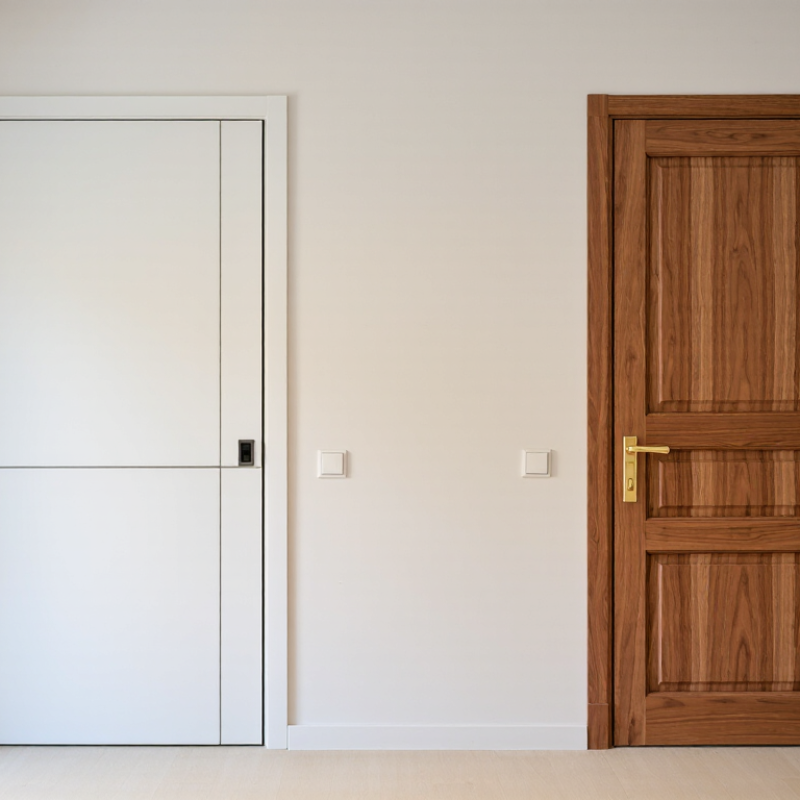
A minimalist door is defined less by its material than by its visual restraint. It often sits nearly flush with the wall, with a narrow frame, concealed hinges, and a discreet handle. The goal is a calm, continuous surface. Look closely, though. Small gaps and uneven edges stand out more when the design has few details to distract the eye.
The door may be made from solid timber, engineered wood, or another suitable material. “Minimalist” does not mean “not wooden.” In 2026, the term commonly describes a clean profile, carefully controlled proportions, and hardware that blends into the design. Some models use concealed frames or paintable surfaces that match the surrounding wall. These details can require more precise manufacturing and installation than a standard framed door.
And, honestly, the label can be slippery. A plain slab is not automatically minimalist if its frame, handle, or finish feels visually heavy. When comparing prices, check what is included: the door leaf, frame, hinges, handle, and fitting work may be listed separately. Installation matters. Even a well-made door can look awkward if the wall is out of square or the gaps are inconsistent. That part is easy to overlook.
How Minimalist Designs Differ from Conventional Wooden Doors
Why Are Minimalist Doors Pricier Than Wooden Doors in 2026?
How Minimalist Designs Differ from Conventional Wooden Doors
Minimalist doors are designed to recede into a room rather than act as decoration. Their faces often sit nearly flush with the wall, with narrow gaps and little visible trim. Some use concealed hinges and a recessed frame. That clean line takes careful planning.
A conventional wooden door may have raised panels, visible casing, and standard hinges. These details give the door a clear outline and can make installation more forgiving. Small gaps matter. With a minimalist design, uneven walls or a slightly misaligned frame can interrupt the flush appearance. Installers may need extra measuring, adjustment, and finishing work.
The price difference often comes from the complete system, not simply the door slab. Concealed hardware, specialized frames, smooth finishes, and skilled installation can add cost. Material choices also vary, so “minimalist” does not automatically mean solid wood or superior durability. A plain-looking door may hide a complex build, but it can also be a poor fit for a home with irregular walls. In 2026, compare the frame, hardware, finish, and labor in each quote; the appearance alone tells you little.
Why Are Minimalist Doors Pricier Than Conventional Wooden Doors in 2026?
Minimalist doors typically cost more because their flush surfaces, concealed frames, precision hardware, custom sizing, and higher installation requirements demand more manufacturing and labor. Conventional wooden doors generally use simpler frames, visible hinges, standard dimensions, and more widely available materials.
Which Materials and Manufacturing Steps Increase Costs?
A minimalist door can look simple, but its clean appearance often depends on hidden components and tighter tolerances. A flush panel may use a dense engineered core to stay flat and resist warping. Some designs add aluminum edging, concealed hinges, or a recessed frame that disappears into the wall. These parts cost more than a basic timber frame and visible hinges. The surface matters, too. Natural veneer needs careful matching, while lacquered finishes require smooth preparation and even coating. Small flaws show clearly on a large, plain surface.
Manufacturing adds labor. Panels may be cut on computer-controlled machines, then trimmed so gaps remain consistent around the opening. Hinge pockets and latch positions must align closely; a few millimeters can spoil the seamless effect. Installers may need to adjust the frame, wall, and door together. That takes time. Acoustic or fire-rated cores can raise costs further, depending on the specified performance and testing.
A conventional wooden door can also be custom-made, so the comparison is not always fair. A simple minimalist model may cost less than a carved hardwood door. And the premium is not always justified. I have seen “seamless” details draw attention to uneven walls instead. Careful measuring, durable finishes, and skilled fitting usually explain more of the price than appearance alone.
How Hardware, Finishes, and Installation Affect the Final Price
Why Are Minimalist Doors Pricier Than Wooden Doors in 2026?
A minimalist door may look simple, but its clean appearance often depends on precise construction. Flush edges, concealed hinges, and magnetic latches can cost more than standard visible hardware. A solid handle may also need careful alignment so it sits neatly against the door. Small details add up. The price depends on the door’s core, dimensions, and local labor, so “minimalist” does not automatically mean expensive.
Finishes affect both cost and upkeep. A smooth lacquered surface may require extra preparation and several even coats; fingerprints and scratches can show clearly in bright hallways. Veneer offers a natural grain, but matching panels across multiple doors takes care. Installation can add another layer of expense. Fitters may need to level the frame, adjust concealed hinges, and trim uneven floors. A few millimeters matter. Older walls can make this work slower, and estimates may miss that until the frame is opened.
Tips: Compare written quotes for the door, hardware, finishing, and installation separately. Ask whether frame adjustments are included. Check how the finish handles cleaning and everyday knocks. If the budget is tight, keep standard dimensions and choose simpler hardware. I would still allow a little room for surprises; renovations rarely stay perfectly tidy.
What Market Factors Shape Door Prices in 2026?
In 2026, a door’s price reflects more than its visible surface. Minimalist designs often need flush edges, concealed frames, precise installation, and carefully aligned hardware. Those details can add manufacturing and fitting time. A basic wooden door may use familiar materials and standard dimensions, but premium timber, custom sizing, or a complex finish can narrow the price gap. The category alone tells you little.
Materials and labor remain major market pressures. The National Association of Home Builders’ 2024 construction-cost survey found that materials represented 64.4% of the average single-family home’s construction cost. That figure is not door-specific, but it shows why changes in timber, engineered panels, metals, and finishes can affect quotes. Freight, energy, and local labor rates also matter. Small differences add up.
Buyers should compare complete specifications, not just door-panel prices. Ask whether the quote includes the frame, hinges, handle, finishing, delivery, and installation. A flush door can look simple while requiring tight tolerances; a visible gap of only a few millimeters may demand adjustment. Yet “minimalist” does not automatically mean expensive, and “wooden” does not mean basic. That comparison is imperfect, but useful.
FAQS
Minimalist doors often sit nearly flush with the wall, with narrow gaps and little visible trim. Conventional doors may show raised panels, casing, and standard hinges.
The complete system may include concealed hinges, a recessed frame, smooth finishes, and skilled installation. The door panel is only part of the cost. Small gaps matter.
No. Materials vary, and a minimalist appearance does not guarantee solid wood or greater durability. Check the material details in the quote.
Flush designs reveal small alignment problems. Uneven walls or a misaligned frame can interrupt the clean line and require extra measuring and adjustment.
Check whether it covers the frame, hinges, handle, finishing, delivery, and installation. A panel-only price can leave important costs unclear.
No. Premium timber, custom dimensions, or a complex finish can narrow the price difference. The category alone tells you little.
Timber, engineered panels, metals, finishes, freight, energy, and local labor rates can all affect quotes. A 2024 construction-cost survey put materials at 64.4% of average single-family home construction costs, but that figure is not door-specific.
Compare the materials, frame, hardware, finish, and labor in each quote. Appearance alone is a weak guide. The comparison is useful, but not perfect.
Conclusion
In 2026, minimalist doors are defined by clean lines, discreet frames, concealed hinges, and carefully controlled details. Unlike conventional wooden doors, which often showcase visible panels, trim, and natural grain, minimalist designs aim for a smooth, uninterrupted appearance. Achieving that look can require more precise engineering, tighter manufacturing tolerances, and additional finishing work. These requirements help explain why are minimalist doors more expensive than traditional wooden doors? Their price may reflect not only the door itself but also the materials and labor needed to create a refined, consistent finish.
The final cost can also rise with specialized hardware, custom dimensions, premium coatings, and professional installation, especially when walls or frames need adjustment. Market conditions in 2026—including material availability, energy and labor costs, shipping, and demand for contemporary interiors—may further influence prices. Comparing options involves weighing appearance and installation needs against durability, maintenance, and budget. A minimalist door is not automatically the better choice; its value depends on how well its design and construction suit the space.

 CR Doors