CR Doors
1. The Strategic Landscape of Namibia's Commercial & Industrial Egress Infrastructure
Namibia is undergoing a steady infrastructural transformation. Guided by the Harambee Prosperity Plan II and the Fifth National Development Plan (NDP5), commercial construction projects in the capital city of Windhoek, tourist facility expansions in Swakopmund, and industrial developments near the Port of Walvis Bay are moving forward. As real estate development advances, fire safety measures are transitioning from local municipal codes to rigorous alignment with South African National Standards (SABS/SANS 10400 Part T) and global standards such as NFPA 101 (Life Safety Code) and EN certifications.
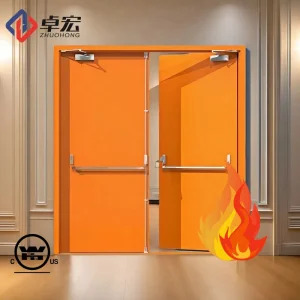
In highly regulated developments, including mixed-use high-rise buildings, public assembly spaces, schools, and medical facilities, emergency exit doors are critical components. They serve two vital purposes: facilitating safe evacuation during emergencies and containing fires to protect surrounding property. Finding reliable emergency exit doors in Namibia can be challenging due to local environmental factors, such as high UV exposure, inland dust storms, and coastal salt spray, which require robust hardware and structural integrity.
2. Global Standards in Emergency Exit Systems
The global emergency exit and fire door industry operates under a system of third-party testing and certification. The primary standards governing steel and wooden fire doors include:
- UL 10B & UL 10C (Underwriters Laboratories): The standard for fire tests of door assemblies, emphasizing positive pressure testing to simulate real-world fire conditions.
- EN 1634-1 & BS 476 Part 22: European and British Standards defining criteria for integrity (E) and insulation (EI) ratings over specified durations (e.g., 60, 90, 120, or 180 minutes).
- NFPA 80 & NFPA 101: National Fire Protection Association standards regulating the installation, inspection, and maintenance of fire doors and life safety exit systems.
These certifications ensure that the door core material (mineral wool, perlite boards, or ceramic fiber), intumescent seals, and hardware (heavy-duty hinges, door closers, and panic bars) function reliably under thermal stress. Meeting these criteria is vital for project approval, insurance compliance, and life safety.